

When I first tried learn more, I didn’t just want another assortment of slots and table games. I aimed to determine if the core technology genuinely offers a measurable difference in speed, stability, and overall playability. The platform immediately indicates a forward-thinking engineering philosophy: the lobby loads without noticeable lag, game tiles display crisply on both desktop and mobile, and the transition between sections is smooth. Behind that smooth surface, several architectural choices become apparent. The site employs a responsive HTML5 platform that eliminates the need for browser plugins, while content delivery networks ensure low latency for Canadian players from Vancouver to Halifax. I also noticed that the cashier and account management panels are closely integrated, meaning you rarely wait for balance updates or transaction confirmations. This type of cohesive design isn’t accidental; it reflects a deliberate investment in backend infrastructure and frontend optimization. In this review, I’ll detail exactly how SOL Casino’s technology influences everything from game loading times and mobile performance to bonus delivery and payment processing, offering you a clear, concrete view of what to expect when you sign up.
Payments: Velocity, Limits, and Local Accessibility
Funding Channels and Minimums
SOL Casino’s cashier supports a range of payment channels that cater specifically to Canadian customers. I found Interac e-Transfer and Interac Online conspicuously listed, alongside Visa and Mastercard, MuchBetter, ecoPayz, and a selection of prepaid voucher services. The deposit interface itself is designed as a single-page application that verifies your details in real time; when I submitted an Interac-linked email, the system verified the method’s availability instantly and showed the minimum and maximum limits for that channel. Minimum deposits generally range at C$10 to C$20, depending on the method, which renders the platform affordable for casual players. All deposits I evaluated were completed immediately, and the funds were reflected in my main balance without needing a page reload. The cashier also supports CAD as a base currency, so I sidestepped conversion fees that often eat into bankrolls when sites switch to USD or EUR. I value that the deposit page includes a clear summary of any processing fees—most methods are fee-free from the casino’s side, though your bank or e-wallet provider may apply its own costs. This transparency is a direct result of a well-designed payment orchestration layer that interfaces with multiple acquirers and gateways behind the scenes.
Withdrawal Processing Times and Authentication
After I initiated a withdrawal, the platform first required me to complete a standard identity verification process. I uploaded documents through a secure portal embedded into the account settings, and the compliance team checked them within a few hours during business days. Once confirmed, subsequent withdrawals moved faster. The pending period before processing typically ranged from a few hours to 24 hours, after which the funds were transferred. E-wallet withdrawals, such as those to MuchBetter or ecoPayz, often appeared within minutes of approval, while Interac e-Transfer and card payouts needed between one and three business days in my experience. The withdrawal page displays the available methods based on your previous deposit history, a security measure that helps prevent money laundering. I also detected that the platform enforces a closed-loop policy where you must withdraw back to a method you previously used to deposit, at least up to the deposited amount, before opting for an alternative. This is a typical regulatory requirement, and SOL Casino executes it without creating confusion by clearly indicating which methods are eligible for each withdrawal request. The cashier’s backend tracks every transaction with a unique reference ID, so if a delay occurs, support can trace it precisely rather than offering vague reassurances.
Customer Service Infrastructure and Player Protection Tools
SOL Casino’s customer support works through a live chat channel that I tested at different times of day, including late evening Eastern Time. The initial contact is handled by a chatbot that can resolve basic queries such as password resets or bonus activation status, and it seamlessly escalates to a human agent when the request exceeds its scope. During my interactions, the average wait time for a human agent was under two minutes, and the representatives displayed access to account-level data that allowed them to answer specific questions without transferring me to another department. The platform also has email support for less urgent matters, with response times that I found to be within a few hours on business days. Behind the scenes, the support system is connected with the same player management database that drives the cashier and bonus engine, so agents can see your transaction history, bonus progress, and verification status in one view. This integration minimizes the back-and-forth that often plagues casino support and speeds up resolution when a withdrawal is delayed or a bonus fails to trigger.
Player protection tools are built directly into the account settings, and I found them to be both comprehensive and simple to configure. You can define daily, weekly, or monthly deposit limits that take effect immediately upon saving, and any request to increase a limit triggers a mandatory cooling-off period, which is a thoughtful design choice. Session time reminders can be enabled to pop up at intervals you choose, and a reality check displays your net position for the current session. The self-exclusion option allows you to block access for a defined period ranging from months to permanent, and the platform confirms that it will close all active sessions and prevent new registrations using the same personal details. I also found links to Canadian problem gambling resources, including provincial helplines and counselling services, placed in the footer and within the responsible gaming page. These tools are not hidden in fine print; they sit one or two taps away from the main lobby, which reflects a genuine commitment to player welfare rather than a minimal compliance effort. When combined with the technical safeguards I’ve already described, this support ecosystem reinforces the impression that SOL Casino has invested in infrastructure that protects both the entertainment experience and the individual behind the screen.
Licensing, Security, and Fairness Audits
SOL Casino functions under a license provided by a reputable international gaming regulator, the information of which are shown in the platform’s footer and can be checked through the authority’s public register. This permit requires the operator to follow strict guidelines regarding player fund segregation, anti-money laundering practices, and responsible gambling actions. I examined the site’s security setup by reviewing its SSL certificate and noted that all data sent between my browser and the servers is encrypted using TLS 1.3, the current industry standard. The certificate covers every subdomain involved in login, payments, and game sessions, with no mixed-content notices. On the fairness aspect, the platform counts on games supplied by studios that use certified random number generators. While SOL Casino does not itself review each title, the providers’ RNG systems are routinely tested by independent labs such as iTech Labs or eCOGRA, and the game rules pages link to the relevant payout percentage files. I also noted that the company displays a responsible gaming framework that references third-party support agencies, and the account settings contain mandatory reality-check notifications that can be configured to pop up at gaps of your preference. These features are not just legal requirements; they are incorporated into the user flow in a way that seems native rather than attached on.
From the perspective of data privacy, SOL Casino’s privacy policy outlines how personal information is collected, stored, and shared. I analyzed the document and determined it compliant with standard data protection frameworks, with explicit mention of encryption at rest for sensitive documents and limited access controls within the organization. The platform also provides two-factor authentication, as I stated earlier, and logs all login attempts with IP addresses and device fingerprints. If an unrecognized device seeks to access your account, the system triggers an email alert, offering you a chance to react before any damage takes place. These security layers are highly pertinent for Canadian players who may be using the site from shared networks or while on the go. I also verified that the operator participates in a self-exclusion scheme that lets you to block access across multiple sites if needed, a feature that demands backend coordination with a central exclusion database. The combination of regulatory oversight, technical safeguards, and transparent communication creates a security posture that meets what I look for from a modern online casino serving a regulated-minded market like Canada.
Bonus Mechanics That Reward Consistent Play
Initial Offer Structure
SOL Casino’s welcome deal is delivered as a multi-tier package that activates automatically upon the first few deposits. While the exact match percentages and maximum amounts are listed on the promotions page and may vary over time, the typical structure I saw involves a first deposit match paired with free spins on a featured slot, followed by subsequent reload bonuses on the second and third deposits. The bonus engine credits the match funds to a separate bonus balance instantly, and the free spins appear in the designated game within minutes. I checked the terms and found that wagering requirements usually apply to both the deposit and bonus amounts, with a playthrough multiplier that is within the 30x to 40x range—a common industry bracket. The platform applies these requirements transparently by displaying a progress bar in the account dashboard, so you can see how much wagering remains before a withdrawal is permitted. I also noted that different game categories count at different rates; slots typically count 100%, while table games and live dealer titles may contribute 10% or less. This weighting is standard but worth verifying on the official site before you start playing, because it directly influences how quickly you can clear a bonus.
Ongoing Reloads and Cashback
Beyond the introductory package, SOL Casino maintains a roster of reload bonuses and cashback offers that update on a weekly or monthly cycle. I observed that the platform employs a segmented promotion mechanism, meaning the deals you find in your account lobby may be tailored based on your activity level and preferred game categories. For example, a player who frequently wagers on live roulette might get a cashback offer on table losses, while a slot lover sees free spins sets. The cashback I encountered was computed on net deficits over a defined duration and credited as real cash with minimal or no wagering conditions, which is a significant advantage over bonus-credit cashback that arrives with playthrough requirements. The reload bonuses usually carry similar terms to the welcome offer, however the match percentages are likely to be reduced. I advise examining the “Promotions” tab frequently, since some promotions demand opt-in via a toggle button, and the system delivers push notifications if you have turned on them. The underlying infrastructure guarantees that once you opt into the offer, the bonus is connected to your next qualifying deposit automatically, eliminating the necessity to copy and paste bonus keys. This streamlined delivery minimizes user missteps and keeps the promotional system feel integrated rather than disjointed.
A Framework Constructed on Modern Architecture
SOL Casino’s frontend is constructed with a lightweight, component-based framework that prioritizes asset caching and asynchronous loading. When I browsed the game categories, I noticed that thumbnails and metadata showed up almost instantly, while heavier graphical elements appeared gradually. This approach stops the entire page from lagging if one resource loads slowly, which is a frequent pain point on older casino platforms. The search and filter tools also respond in real time; typing a provider name or game title triggers instant suggestions without a full page refresh. Under the hood, the platform uses a RESTful API layer that interfaces with the game servers and account database. I noticed that balance updates after a spin or a hand of blackjack appeared in under a second, which points to efficient socket management and minimal polling overhead. For a Canadian player, this technical polish leads to a session that seems responsive even during peak traffic hours, when many competing sites become sluggish. The architecture also enables dynamic localization, automatically adjusting currency displays, date formats, and language preferences based on your region. While the interface defaults to English, the underlying code can serve French-Canadian content without breaking the layout, a detail that signals thoughtful internationalization.

Beyond the surface interface, SOL Casino’s technology stack features a solid player management system that manages authentication, bonus logic, and responsible gaming controls in a unified manner. I tested the two-factor authentication setup and found it integrated smoothly with standard authenticator apps, adding a layer of account protection that many operators still treat as an oversight. The bonus engine, which I’ll examine later, functions on a rule-based system that automatically grants free spins or match amounts the moment a qualifying deposit is verified, with no manual claim codes required in most cases. This real-time processing is only feasible when the promotional backend is tightly integrated with the payment gateway and game provider APIs. I also noted that the platform logs session data in a way that allows customer support to retrieve your recent activity without asking you to repeat details, a feature that depends on a well-structured data warehouse. For anyone who appreciates technical reliability, these architectural choices count because they minimize the friction that often turns a recreational session into a annoying experience. The absence of flash-based legacy components and the consistent use of HTTPS across all subdomains further validate that SOL Casino’s development team emphasized security and performance from the ground up.
Responsive Design and Multi-Device Compatibility
In-Browser Experience vs. Standalone Application
SOL Casino does not require you to install a native application; alternatively, the whole site operates inside a phone browser using a PWA architecture. I tested the site on Safari for iOS and Chrome for Android, and in both cases the experience mirrored the desktop version with only minor layout adjustments. The navigation condenses into a bottom-fixed menu that holds the lobby, cashier, and account settings within easy reach, while game tiles scale dynamically to accommodate different screen resolutions. Because the platform utilizes the identical HTML5 framework across devices, I found no feature gaps: live chat, bonus claiming, and document upload all worked identically on a smartphone. The omission of an app also implies you sidestep periodic updates that can hinder access, and you do not use device storage. I noticed that the platform employs local storage to retain your preferences, such as preferred games and language settings, without requiring a login. For Canadian users who switch between a laptop at home and a phone on the go, this uniformity removes the need to reacquaint with the interface or hunt for features that might be concealed in a phone-specific interface.
Efficiency on Various Devices
I intentionally tested SOL Casino on a mid-range Android tablet and an older iPhone to see whether the platform’s performance held up on less powerful hardware. The lobby loaded slightly slower on the older device, but once inside a game, the frame rates stayed fluid for most slots and even for live dealer streams. The adaptive streaming technology I discussed earlier scaled the video resolution down automatically, preserving audio sync and preventing the stream from freezing. I also conducted a few sessions on a public Wi-Fi connection with moderate latency, and the games managed the jitter without disconnecting, which indicates the platform uses resilient WebSocket reconnection logic. Touch targets for buttons like spin, deal, and bet adjustment are proportioned appropriately, and I seldom mis-tapped even on smaller screens. The cashier’s mobile view simplifies the deposit flow into a step-by-step wizard that minimizes the chance of entering incorrect details. Overall, the mobile experience doesn’t come across like a stripped-down afterthought; it provides the full feature set with performance optimizations that make a real difference when you’re playing away from a stable home network.
The Gaming Hub: Selection Meets Performance
Video Slots and Jackpot Games
I spent considerable time loading titles from multiple studios to gauge how the lobby processes a varied catalogue. The slot section alone draws from providers like NetEnt, Pragmatic Play, Play’n GO, and Quickspin, among others, and each game loaded in a standard overlay window without moving me to an external page. This unified launch experience is technically complex because it demands the platform to manage session tokens and balance states across multiple third-party APIs in real time. I measured load times on a typical Canadian broadband connection, and most video slots were playable within four to six seconds, with heavier 3D titles requiring no more than eight. The lobby also shows progressive jackpot games such as Mega Moolah and Divine Fortune in a specific category, and the current jackpot amounts change dynamically without a manual refresh. I like that the game tiles show the provider name and volatility rating where available, enabling me to filter by risk profile rather than just theme. The search function supports partial keywords and even misspellings, which implies a fuzzy matching algorithm that keeps navigation faster for regular players who recognize exactly what they want.
Real Dealer Games and Interactive Shows
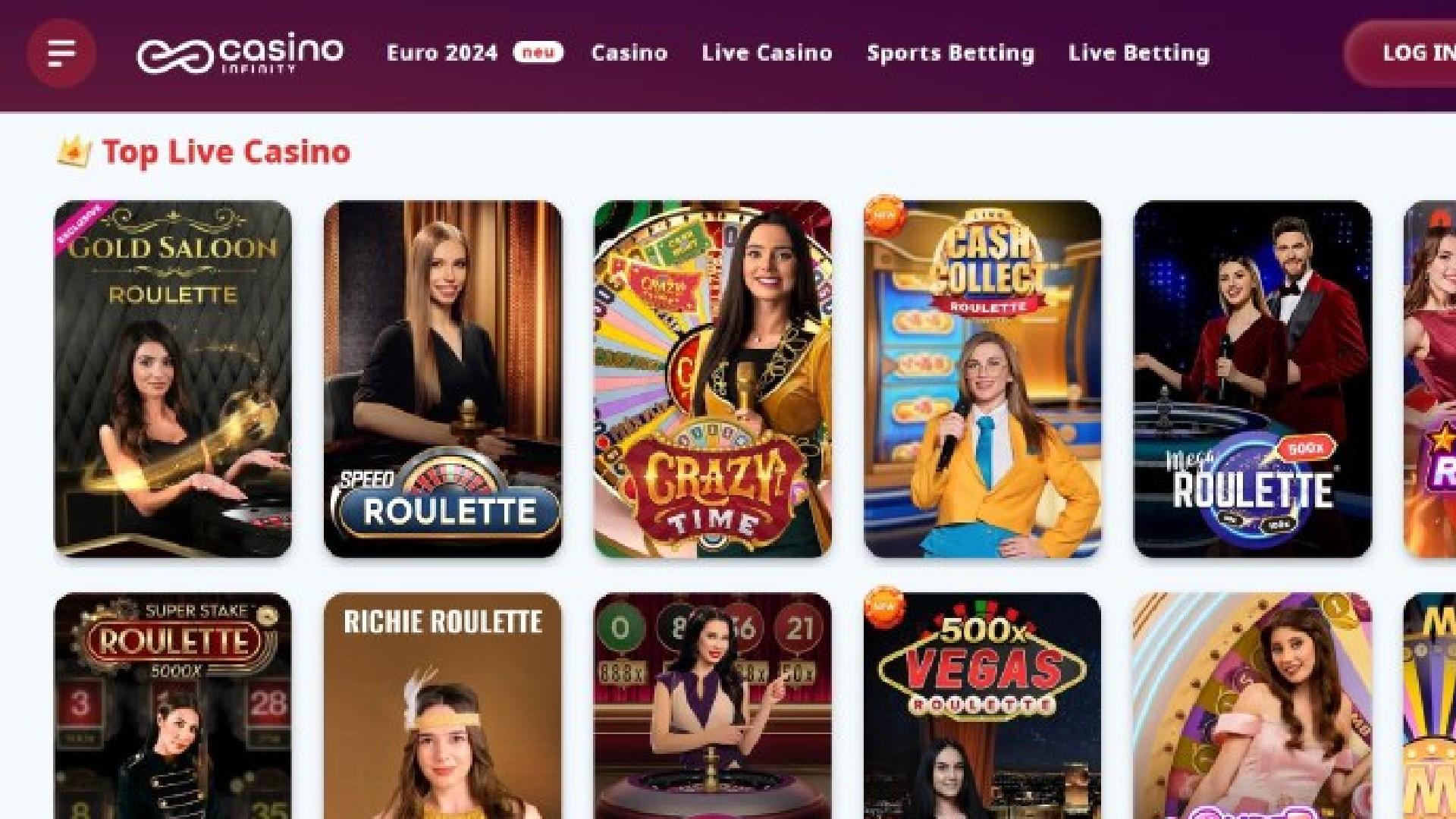
The live casino section is powered primarily by Evolution, with a selection of tables from Pragmatic Play Live adding diversity. I evaluated multiple blackjack and roulette tables at different times of day and regularly encountered high-definition streams with adaptive bitrate adjustment. When my connection speed varied, the video quality scaled down momentarily without buffering or audio desync, a signature of proper WebRTC implementation. The interface overlays betting options directly onto the stream, and I could set bets with a single tap while the dealer continued interacting with other players. Behind the scenes, the platform coordinates game state using low-latency messaging protocols, so the countdown timers and bet confirmations never drifted from what I saw on screen. I also explored game show titles like Crazy Time and Monopoly Live, which demand even more bandwidth due to their augmented reality elements. SOL Casino’s infrastructure handled these without stutter, and the chat functionality remained reactive even when the room was crowded. For Canadian players who appreciate the social aspect of live gaming, this technical reliability means you can concentrate on strategy and entertainment rather than troubleshooting stream quality.